
What do Netflix, Spotify, and Duolingo have in common – besides hundreds of millions of users? They all cracked the code on subscription model pricing strategy. And the businesses quietly copying their playbook aren’t just SaaS companies anymore.
In 2026, the subscription economy is on track to surpass $1.5 trillion globally. Yet most startups and SMEs are still doing it the old way – burning cash on freelancers, overpaying for agency retainers, or trying to hire full teams they can’t sustain.
At mg.limited, we built our Marketing Subscription on the same logic that turned these three brands into household names – and it works especially well for startups and SMEs who need professional marketing without the overhead.
Why Subscription Model Pricing Is Reshaping How Businesses Buy Services
A subscription model pricing strategy is simple: pay a predictable recurring fee for continuous access to a product, service, or team. Unlike one-off projects, the value doesn’t stop when the invoice is paid, it compounds.
According to Zuora’s Subscription Economy Index, businesses built on a subscription pricing model grew nearly 4.6x faster than the S&P 500 over the past decade. The shift is accelerating.
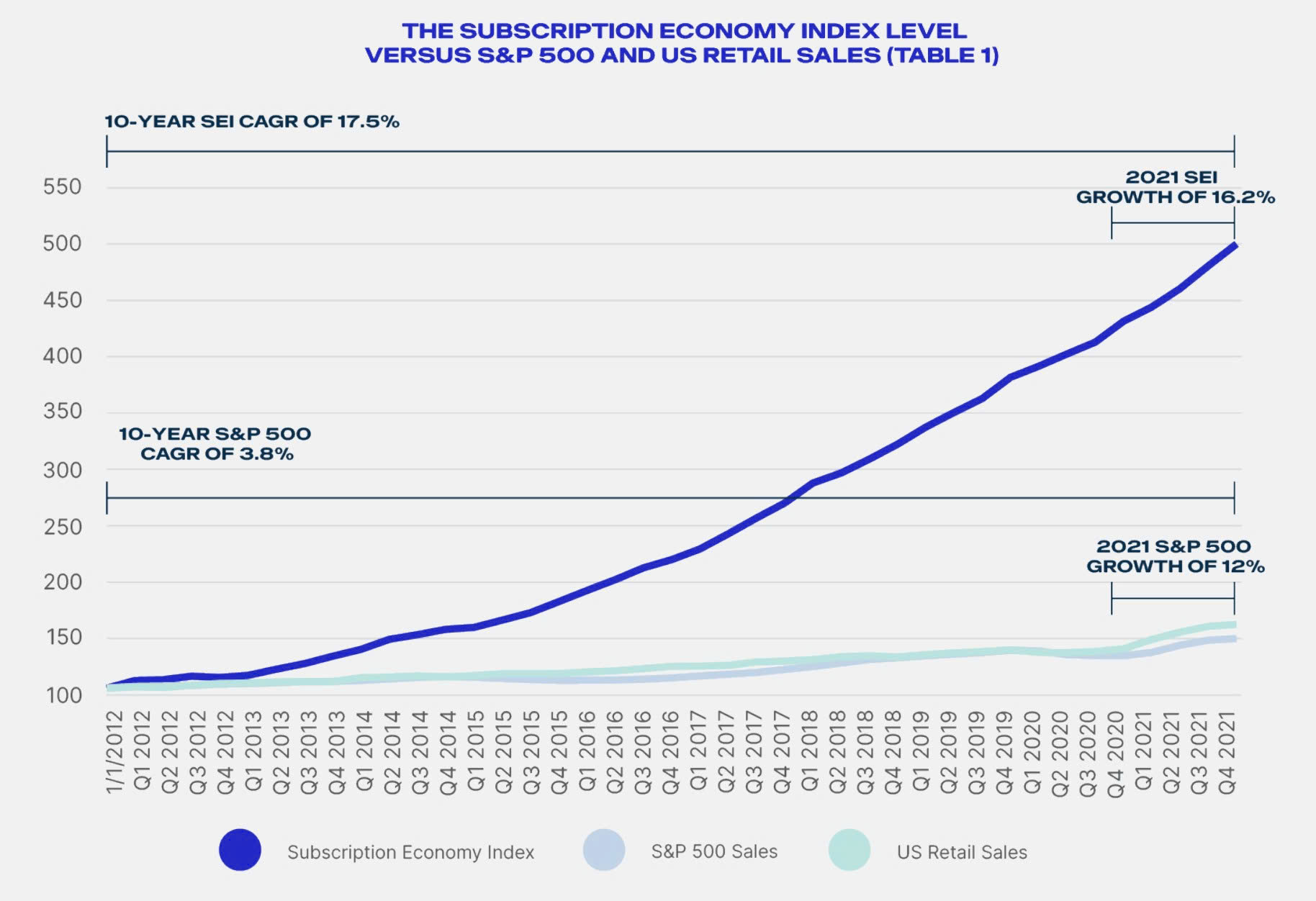
Marketing budgets are under pressure, headcount is expensive, and businesses need expertise on demand, not full-time overhead. That’s why marketing subscription pricing is gaining traction: it replaces unpredictable agency retainers and hiring costs with one consistent, scalable investment.
The question isn’t whether to subscribe – it’s what you should be subscribing to.
Netflix: Tiered Access Removes the “All or Nothing” Trap
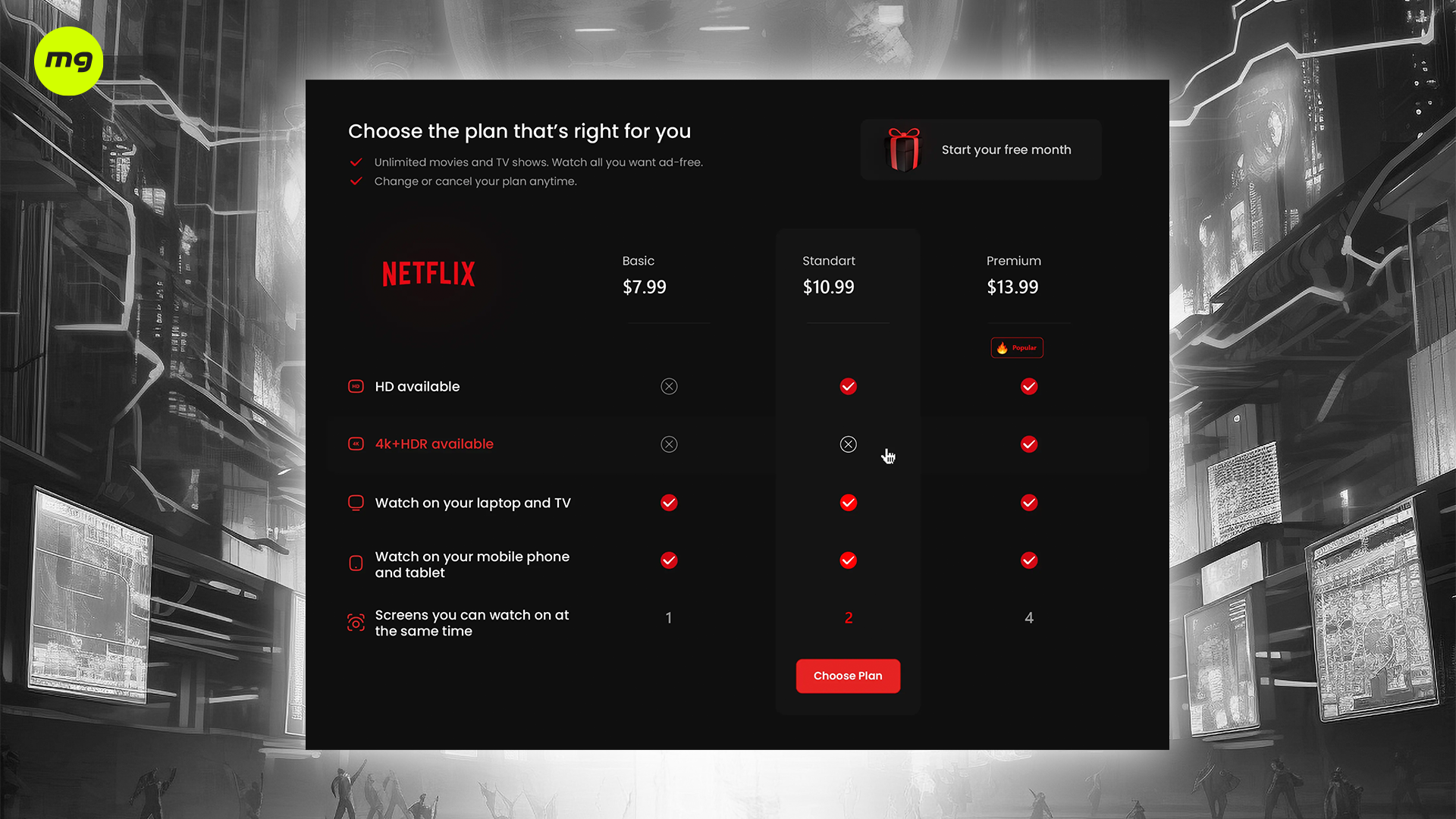
Netflix doesn’t offer one plan. It offers a ladder (Basic, Standard, Premium), so every subscriber finds a comfortable entry point. Nobody is priced out. Nobody overpays on day one. The tiered model works because it meets customers exactly where they are, then grows with them.
Core lesson: You don’t assemble a Netflix production crew for every show you watch. You subscribe to the output. Meeting customers at their budget stage drives adoption without diluting brand value.
Spotify: Value Perception Beats Price Resistance
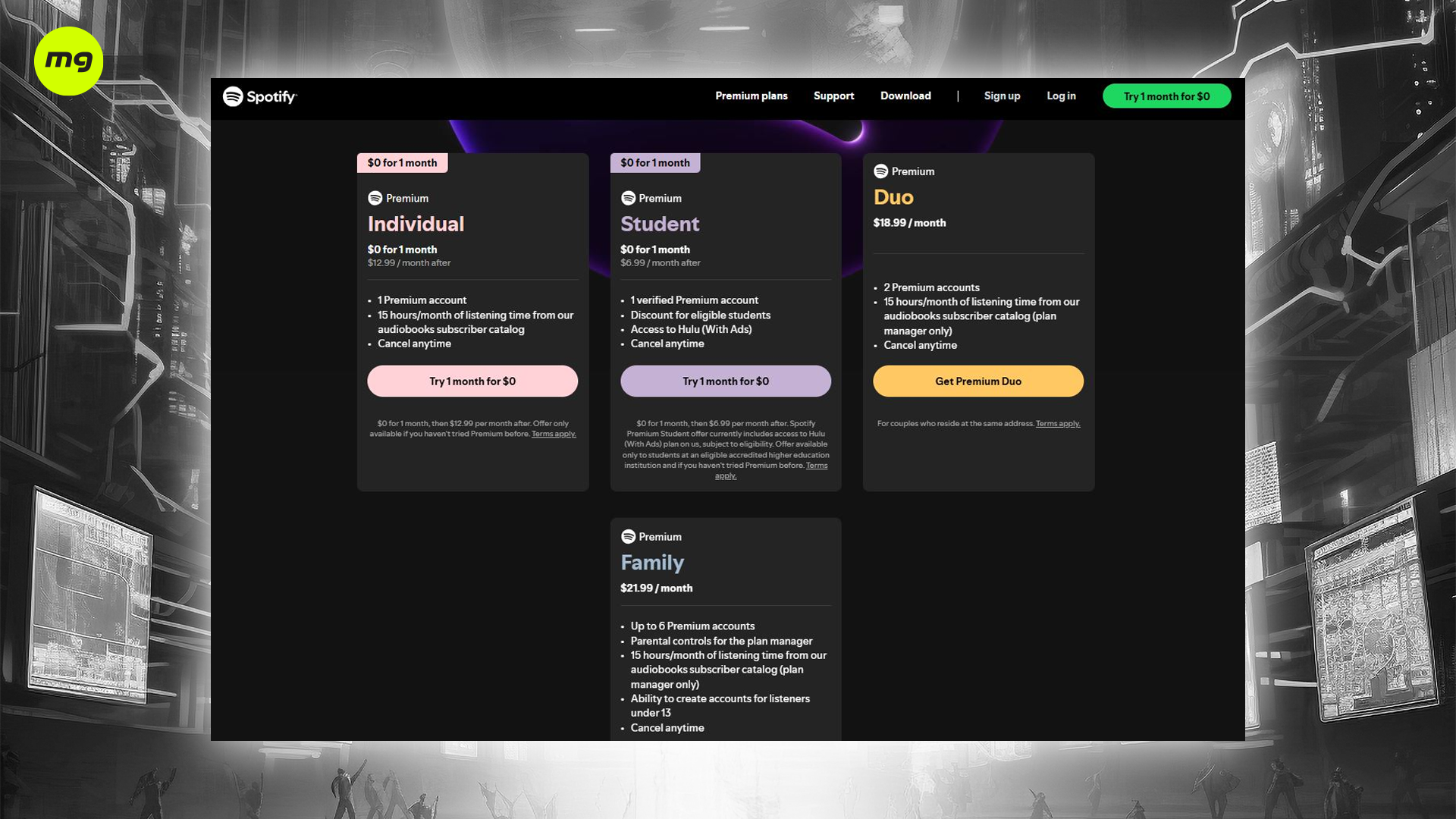
Spotify’s genius wasn’t the music. It was the sequence: give first, prove value, then convert. Free tier removes the risk. Premium removes the friction. By the time a user hits a paywall, the value is already felt – price becomes an afterthought, not a barrier.
Core lesson: Spotify Premium costs less than owning every album you love. When people experience value before committing, price resistance dissolves on its own.
Duolingo: Consistency Is the Real Competitive Advantage
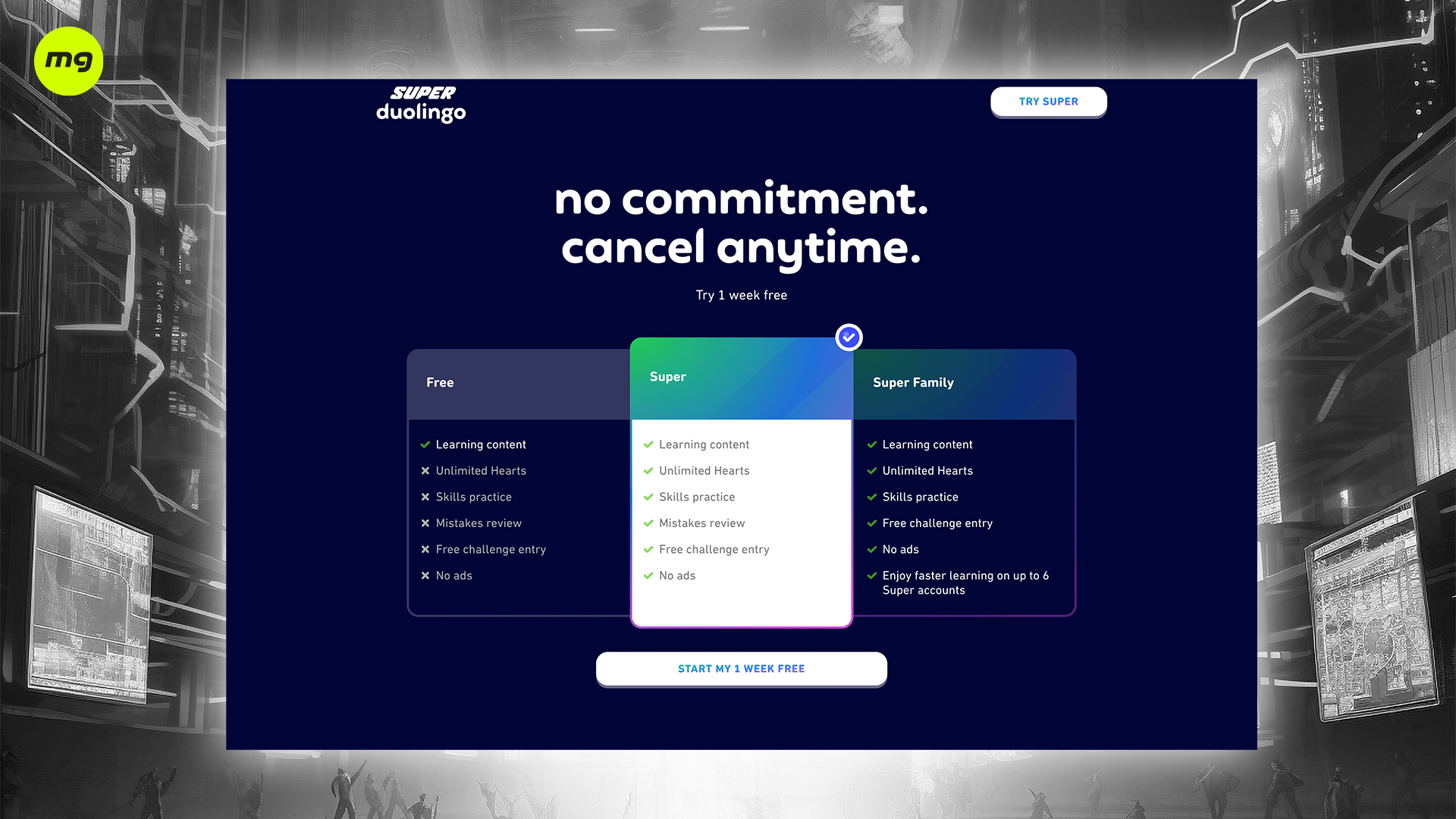
Duolingo doesn’t sell intensity. It sells habits. Small, daily actions – delivered through a subscription cadence, compound into fluency over time. The pricing model reinforces the behavior: stay subscribed, stay consistent, see results.
Core lesson: You don’t become fluent in a language from one lesson! Sporadic effort produces sporadic results. Subscription pricing works because it funds, and enforces consistency.
The 3 Shared Principles: Applied to Your Marketing Budget
The world’s most successful subscription brands (Netflix, Spotify, and Duolingo) didn’t grow by accident. They grew because they mastered one subscription model pricing strategy that every business can learn from: people commit when they feel in control.
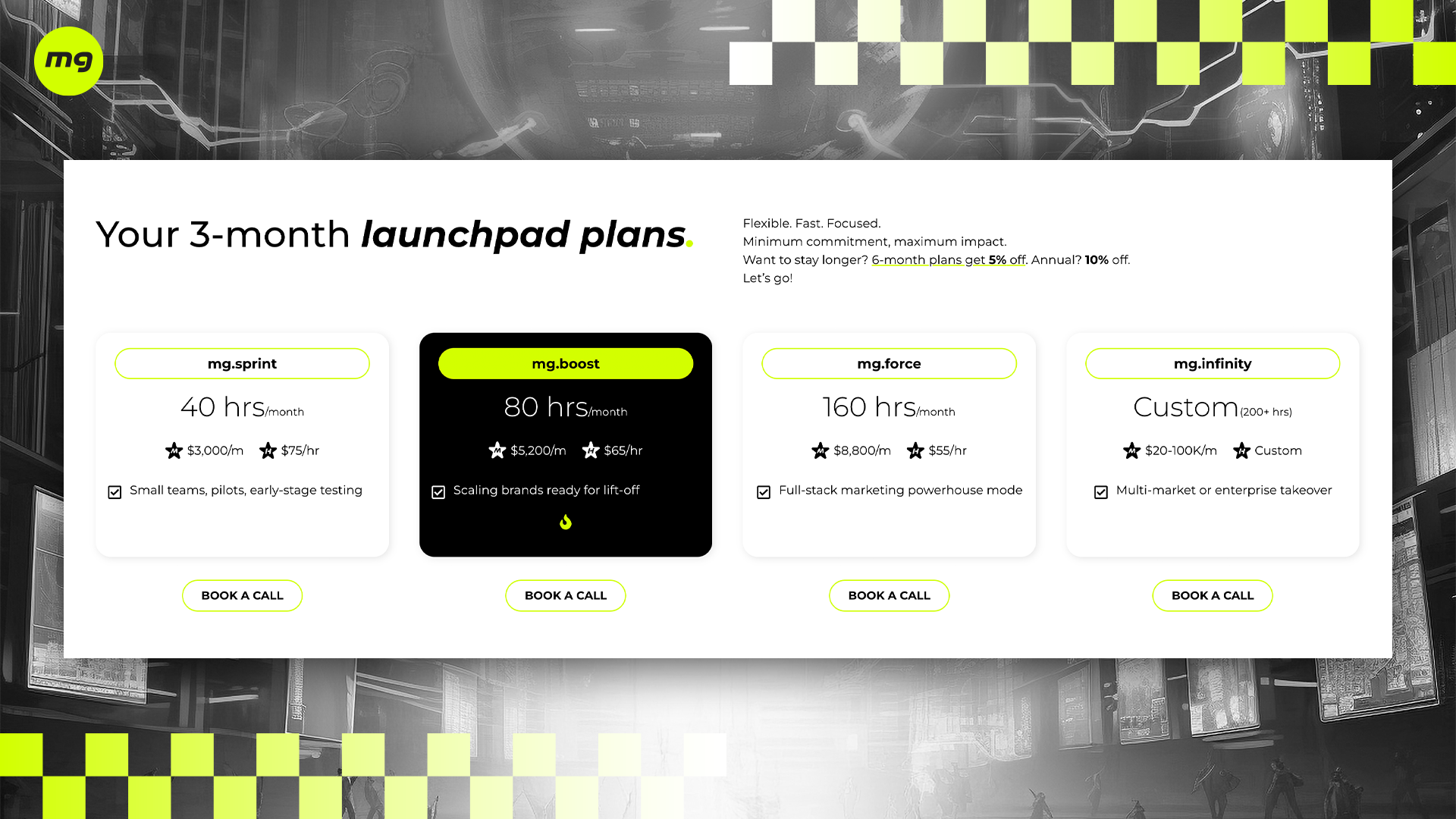
That same logic is exactly what mg.limited’s Marketing Subscription is built on:
- Tiered flexibility (Netflix): Netflix never forces you into a plan you’re not ready for. Neither do we. You enter mg.limited’s Marketing Subscription at the right level for where your business is today, and scale up when you’re ready. No friction. No disruption.
- Value before commitment (Spotify): Spotify lets you experience the full product before you invest. Our marketing subscription pricing works the same way, giving you access to a complete marketing team at a fraction of the cost of hiring in-house, with zero HR overhead and zero onboarding lag.
- Consistency compounds (Duolingo): Duolingo’s secret isn’t intensity, it’s showing up every day. Marketing works the same way. Our monthly subscription keeps your brand active, consistent, and building momentum over time, so results compound instead of reset.
Both startups and SMEs share the same core need: predictable access to professional marketing, without unpredictable costs. A smart subscription pricing model makes that possible, and that’s exactly the gap Mueller Group’s Marketing Subscription was built to close.
>>> Related article: Subscription Marketing Strategy: The Smartest Investment for Startup Growth in 2026
The Bottom Line
Netflix taught us: meet clients where they are. Spotify taught us: prove value before asking for commitment. Duolingo taught us: consistency wins over time. Together, they define what a winning subscription model pricing strategy looks like in practice.
The businesses winning in 2026 aren’t the ones with the biggest budgets – they’re the ones with the most efficient, most consistent, and most scalable access to marketing expertise. At mg.limited, we wake up every day with one mentality: go the extra mile.
Ready to do the same with your brand? Let’s build something extraordinary together. Explore Marketing Subscription → Book a Discovery Call
FAQ
1. What is a subscription model pricing strategy? A recurring billing structure where customers pay a fixed monthly or annual fee for continuous access to a product, service, or team. The value compounds over time – unlike one-off purchases.
2. Is marketing subscription pricing more cost-effective than hiring in-house? Yes. Building an equivalent in-house team typically costs $195,000–$290,000/year in salaries alone – before tools, benefits, or onboarding. A Marketing Subscription delivers the same output at a fraction of the cost.
3. What types of businesses benefit most from a digital service subscription? Startups and SMEs. Startups get senior marketing expertise without headcount risk. SMEs replace fragmented agency relationships with one scalable, coordinated team.
4. How is mg.limited’s Marketing Subscription different from a traditional agency? No project fees, no rigid retainers. Mueller Group offers tiered, flexible plans – strategy through execution – on one predictable monthly investment that adjusts as your business grows.
