
Public relations has become one of the most decisive forces in modern brand growth. What happened in Vietnam during 2025 proved that clearly. A mobile app interface. A small visual detail on a product. Both escalated into nationwide backlash, boycotts, and regulatory intervention.
These incidents are no longer just “last year’s news.” In early 2026, they stand as fresh reference points for brands planning expansion across Asia. They show what happens when marketing and public relations move at different speeds.
At Mueller Group Limited, we believe brands must learn fast, adapt faster, and move forward smarter. That mindset defines how we go the extra mile – especially when the stakes are cultural, not just commercial.
Why the Nine-Dash Line Became a Public Relations Flashpoint
To understand the backlash in 2025, brands must first understand perception.
In Vietnam, the nine-dash line is not viewed as a neutral design element. It represents territorial disputes tied to national identity and historical tension. While some global teams treated it as a generic map graphic, local audiences interpreted it as a political statement.
This is where public relations in marketing plays a critical role. Marketing focuses on experience and reach. Public relations focuses on meaning, emotion, and interpretation. When those perspectives aren’t aligned, brands unintentionally create controversy.
As we move into 2026, this gap matters more than ever. Consumers are faster to react, platforms amplify outrage instantly, and symbols travel without context. Brands that fail to read cultural signals early will continue to face public pushback.
2025 Brand Backlashes that Redefined Marketing and Public Relations
The events of 2025 offered a clear warning – and two real-world examples.
A high-end Chinese milk-tea brand, Chagee, launched in Vietnam with a mobile app whose store locator displayed the disputed nine-dash line. What may have appeared to internal teams as a minor interface detail was quickly interpreted by Vietnamese users as a political message. Public criticism spread rapidly across social platforms, triggering app removals and a nationwide boycott.
Around the same time, Baby Three, a toy brand, faced backlash after a doll design featured markings that visually resembled the same disputed symbol. Social media pressure mounted, products were pulled from shelves, and regulators stepped in. In both cases, neither brand intended to provoke controversy. Intent, however, proved irrelevant.
From a marketing and public relations perspective, the issue wasn’t creativity—it was governance. Assets went live without sufficient cultural review. Public relations teams were forced into reactive mode instead of leading decision-making.
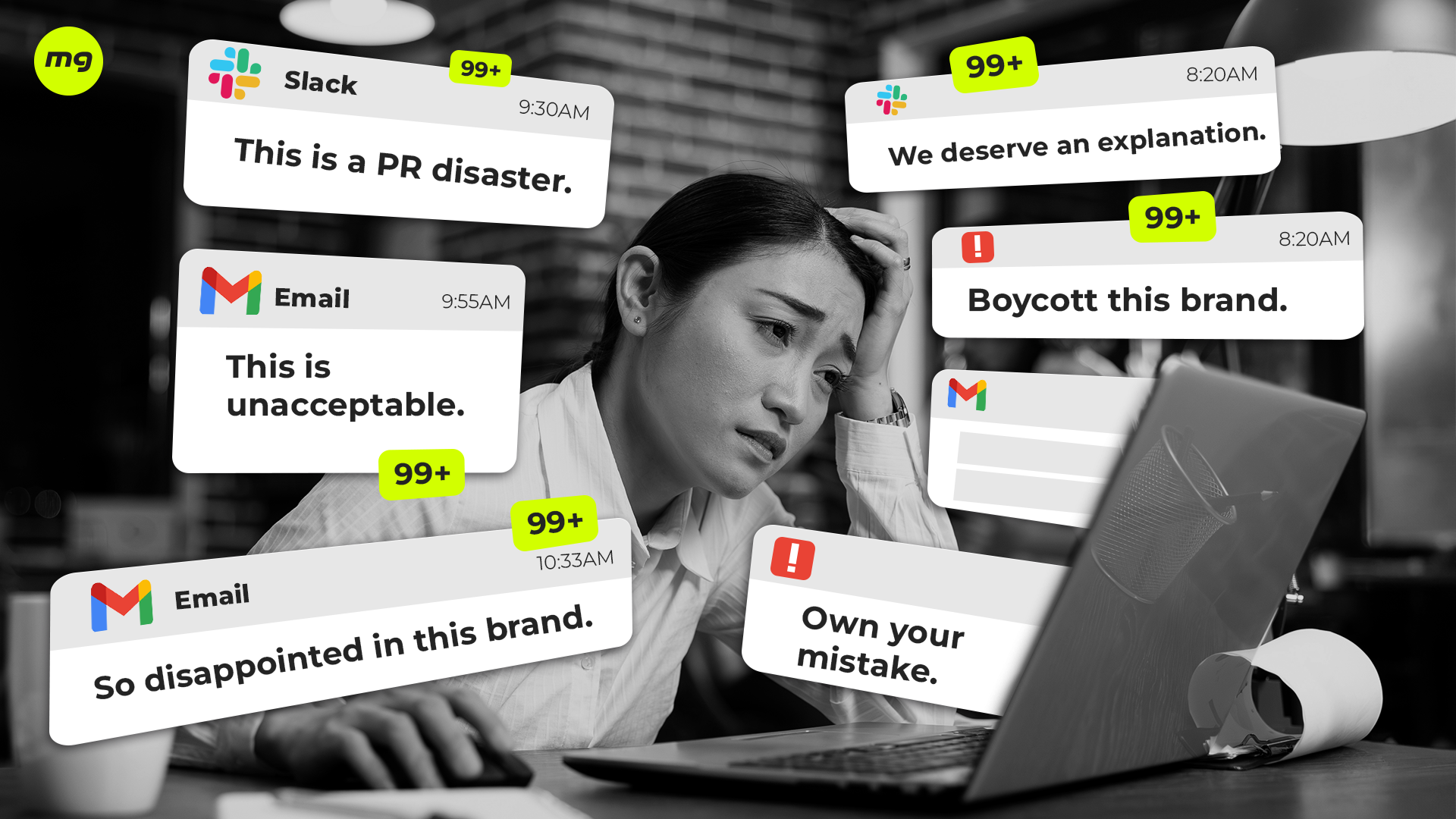
What made the situation worse was the response strategy. In Chagee’s case, dismissive public messaging reframed the narrative from “oversight” to “disrespect.” In today’s environment, especially entering 2026, brand tone is no longer a soft skill. It is a strategic asset.
Why Public Relations in Marketing Must Lead in 2026
The biggest lesson from 2025 is structural, not tactical.
Too many organizations still treat public relations as a safety net. Marketing launches first. PR steps in if things go wrong. That model no longer works. In 2026, public relations in marketing must be embedded from the start.
When PR thinking leads:
- Cultural risks are identified before campaigns launch
- Messaging is stress-tested against local sentiment
- Brands anticipate how content may be reframed on social platforms
At Mueller Group Limited, we design strategies where marketing ambition and public relations discipline move together. Creativity remains bold, but never careless. That balance allows brands to grow without triggering unnecessary resistance.
What Brands Must Do Differently Going Into 2026
The 2025 incidents are no longer warnings. They are benchmarks.
Treat cultural insight as strategic infrastructure
In 2026, local knowledge is not optional. Brands expanding into Vietnam and similar markets must treat cultural intelligence like legal or financial due diligence. This is where marketing and public relations must collaborate deeply.

Build review systems, not last-minute checks
Apps, packaging, visuals, UX elements—every touchpoint must be reviewed with both marketing and PR lenses. As Chagee and Baby Three demonstrated, small details create big consequences.
Prepare response frameworks before growth
Crisis communication plans should exist before market entry. Speed, empathy, and clarity remain the most effective tools when backlash emerges.
Apologize early, adapt fast
In the 2026 landscape, silence and defensiveness escalate damage. Brands that acknowledge concerns quickly often regain trust faster than those that try to justify mistakes.
This is how brands truly go the extra mile—by learning from the past without being trapped by it.
Balancing Marketing and Public Relations in a Post-2025 Landscape
As we move deeper into 2026, the line between marketing and public relations continues to blur.
Vietnam remains a high-growth, digitally active market. However, it is also highly sensitive to issues of national identity. Brands that respect this balance earn trust. Brands that ignore it face rapid rejection.
From a marketing and public relations standpoint, the trade-off is clear.
Risks:
- Public boycotts amplified by social platforms
- Platform removals or regulatory pressure
- Reputation damage extending beyond one market
Rewards:
- Strong emotional loyalty
- Organic advocacy and earned media
- Sustainable, long-term brand equity
At mg.limited, we see these dynamics not as obstacles, but as filters. They separate brands that merely enter markets from those that actually belong.
Turning 2025 Lessons Into 2026 Strategy
Culture-driven backlash is not a trend—it’s the new baseline.
Brands that succeed in 2026 will not be the loudest. They will be the most aware. They will integrate marketing and public relations from the earliest strategic conversations. And when mistakes happen, they will respond with accountability instead of ego.
At Mueller Group Limited, our approach is grounded and clear:
- Understand the rules deeply
- Challenge them responsibly
- Move forward with intention
That’s how we help brands expand with confidence in 2026 and beyond. That’s how we go the extra mile—not just creatively, but culturally.
If you’re planning your next market move this year, let’s BOOK A CALL with us.