
Most brands have a logo, a color palette, a font system, or a tagline that took three months and four agency revisions to land. Yet, nobody remembers what they actually stand for. That’s the brand identity problem.
At mg.limited, we’ve seen that real brand identity meaning has almost nothing to do with design. It’s about choosing one clear idea, and committing to saying it relentlessly, long after your team is bored with it. This is how we go the extra mile, not doing more things, just one thing brilliantly, repeatedly, forever.
TL;DR:
- Brand identity is your one idea. Not your logo.
- Consistency is a competitive advantage, not a creative limitation.
- Brand image is what people believe. Brand identity is what you intend. Close the gap.
- Awareness only compounds when identity is already clear.
- Most brands don’t fail because the idea is bad. They quit before it lands.
What Brand Identity Actually Means
Brand identity is one of the most used and most misused terms in marketing. Most people think brand identity is visual assets, such as logo, colors, typography, and packaging. They’re not wrong, but they’re the output of identity, not the identity itself.
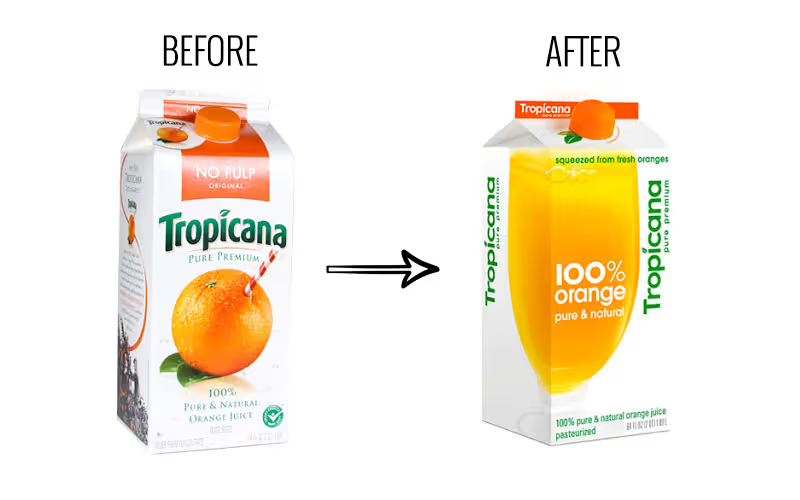
Treating design as the foundation is the mistake that costs brands millions and years of compounding trust (Council, 2025). Real-world proof: Tropicana’s 2009 packaging redesign resulted in a $30M increase in sales within two months. They changed the look, leaving the identity undefined underneath.
At Mueller Group Limited, we’d say it plainly: you can’t design your way to a brand. You have to earn it through repetition. The uncomfortable truth: your identity lives in your audience’s mind, not your brand guidelines.
The Real Brand Identity Meaning: One Idea, Said 1,000 Times
Brand identity is the single, consistent idea you commit to owning repeatedly across every touchpoint, every channel, every year, until it becomes inseparable from your name. Jeff Bezos said it best: ” Your brand is what people say about you when you’re not in the room.” The 1,000 times principle follows naturally.
One message, said consistently over time, builds recognition. One thousand different messages, each said once, build nothing.
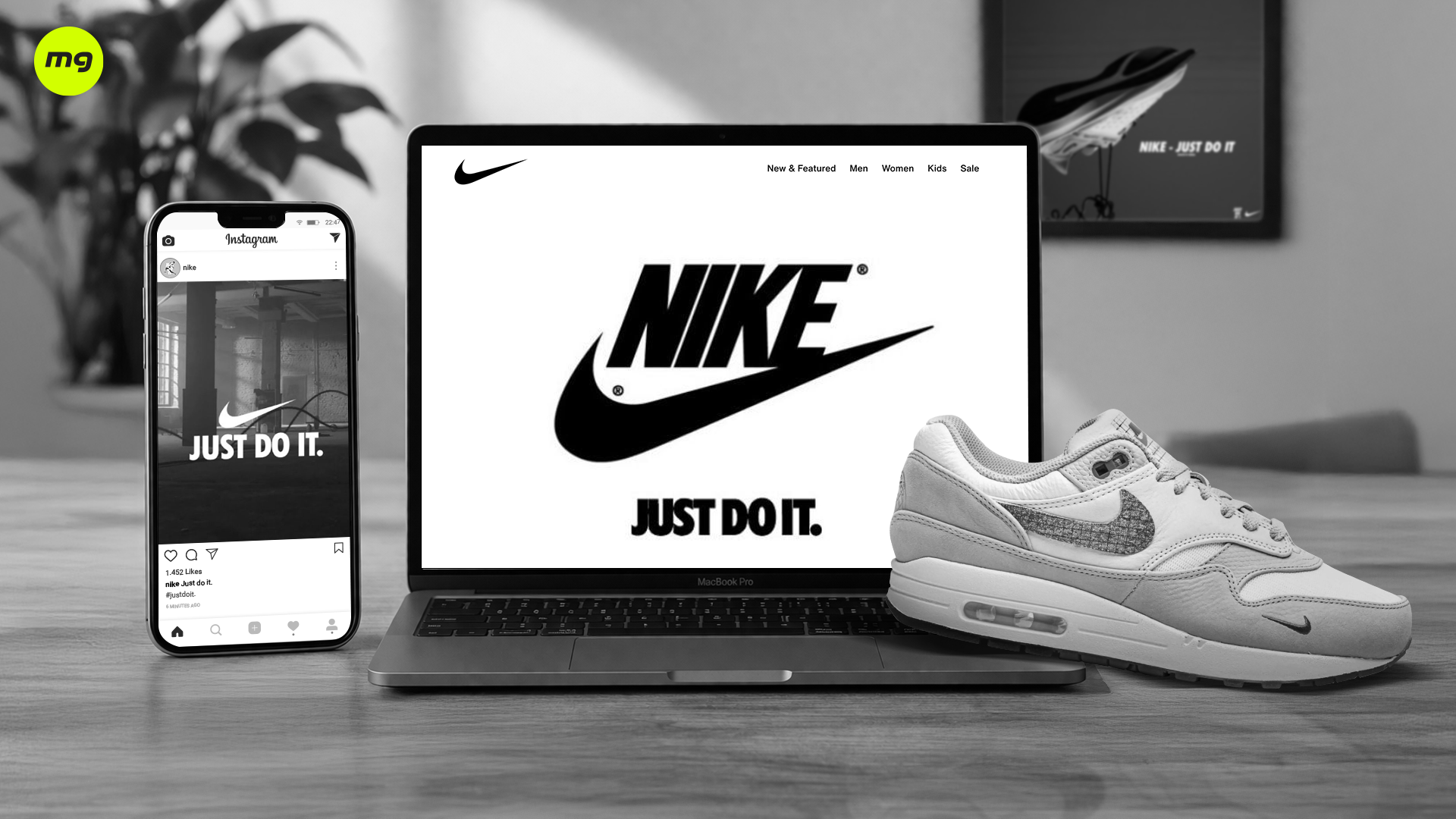
Nike doesn’t just sell shoes; they sell human potential. Every campaign, every athlete, every product drop says the same thing differently. That’s discipline.
Brand Identity and Brand Image: Two Sides Of The Coin
Identity is what you send. Image is what lands.
Brand identity lives internally. It’s the story you choose to tell, the position you commit to, the values that show up in every decision.
Brand image lives externally. It’s formed in reviews, social comments, customer memories, and the split-second impression someone gets from your website at 11pm.
The goal is to make them say the same thing. Every time your message is inconsistent, a micro-gap opens between identity and image. Eventually, your audience can’t describe what you stand for. Reebok is a clear example of this gap in action, rebranding repeatedly in search of identity, yet without a distinctive, consistent positioning to anchor it.
>>> Read more: Reebok’s Rebranding – A Comprehensive Analysis
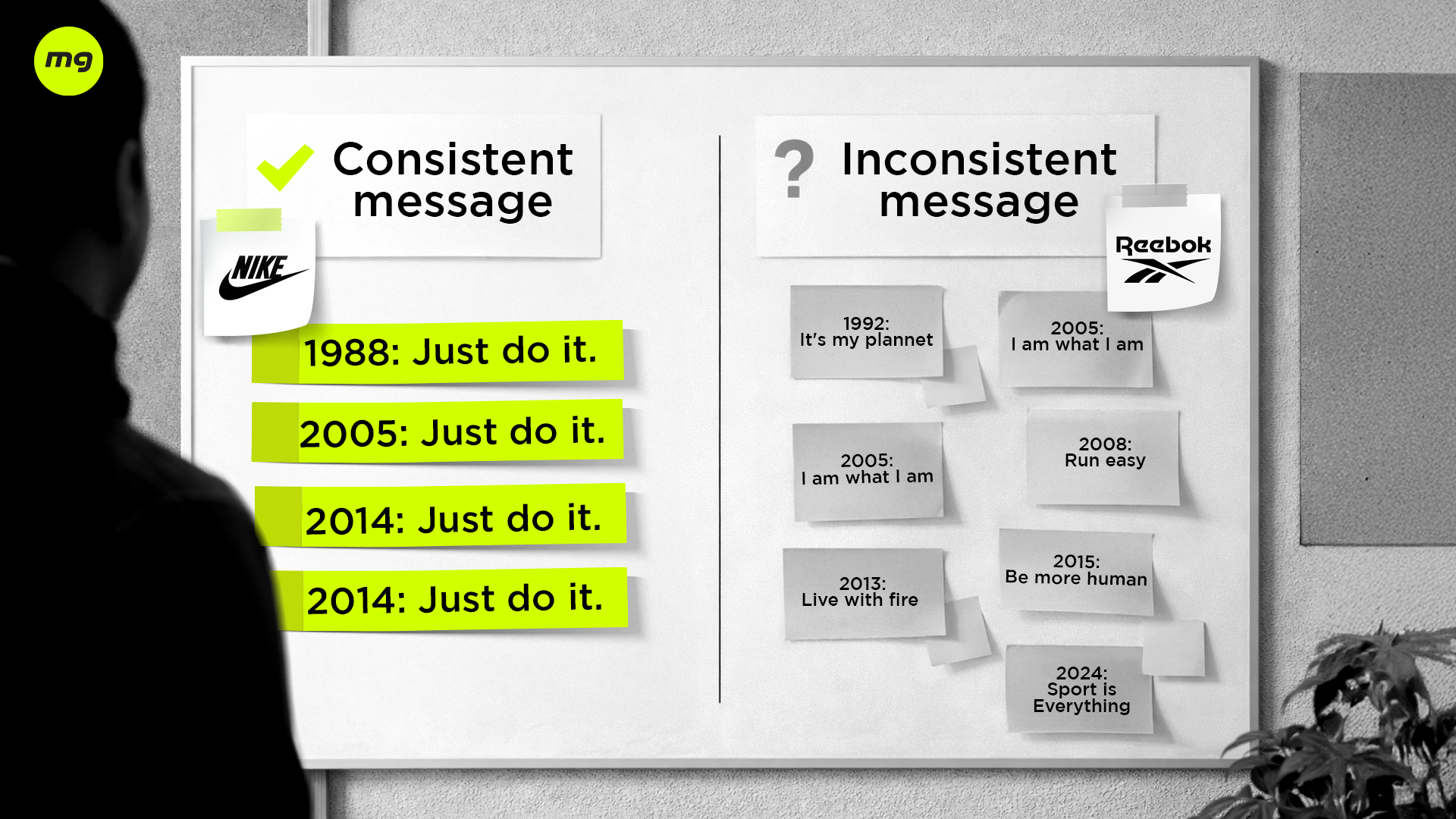
Consistency is the tool that works. Brands presenting consistently across all platforms see revenue increases of 10–20% on average (Marq, 2021). At mg.limited, we call this Go the extra mile most brands never bother to walk.
Brand Awareness vs Brand Identity: Get the Sequence Right
Brand awareness means people know your name. Brand identity means people know what you stand for. You can have massive awareness with zero identity but it’s an expensive noise that nobody can describe.
Why Awareness Without Identity Is Just Noise
Identity drives actions. When your brand knows what it stands for, it not only builds recognition but also shapes how people behave around.
Spending on awareness before your identity is clear is like turning up the volume on a signal that hasn’t been tuned yet. You reach more people with a confusing message. It compounds nothing.
Brand awareness vs brand identity is about understanding that one is the foundation, and one is the amplifier.
>>> Related article: Social Media Management: The Extra Mile of Marketing
The Identity-Ready Checklist Before Any Awareness Spend
Before committing budget to reach, run this quick audit:
- Can every team member describe what your brand stands for in one sentence or the same sentence?
- Does your content from 12 months ago say the same thing as today’s content?
If any answer is “no” or “I’m not sure”, that’s your brief. Identity before awareness. Every time.
The “Say One Thing, 1,000 Times” Framework
Find your one thing. It’s the idea you want to own. Simple enough to say in one sentence. True enough to defend. Different enough to be ownable. Volvo = safety. Patagonia = environmental responsibility. Apple = simplicity as power. Ask yourself: if your brand disappeared tomorrow, what idea would go with it?
Translate it everywhere. Your brand identity should show up in your website copy, social content, sales conversations, customer service tone, hiring language, and product decisions. Brand identity is not a marketing project; it’s an organizational commitment.
Repeat it before you’re ready to stop. By the time your team is tired of the message, your audience is just starting to recognize it. Research shows it takes 5–7 brand impressions before a message registers (Forbes). Consistency is not a creative failure. Consistency is the strategy.
Protect it when everything else changes. Trends change. Platforms change. Your one thing shouldn’t. Evolving how you express the idea is healthy. Abandoning the idea of chasing something new is expensive.
Consistency Is the New Sexy: What That Means in 2026
In a world drowning in content, trend-chasing, and algorithm anxiety, the most radical thing a brand can do is stay the same. Meanwhile, brands that commit to one clear idea create a compounding recognition curve, accelerating return on every future impression.
Coca-Cola has owned happiness for 130+ years. Patagonia has owned environmental responsibility since 1973. Apple has communicated simplicity as human empowerment since 1984. The campaigns evolve. The idea never moves. These brands don’t win because of budget; they win because they refuse to abandon their one thing.
As AI-generated content floods every channel, the brands with a clear, consistent, genuinely human identity become exponentially more valuable by contrast. AI can produce volume. It cannot produce a real point of view, held consistently, over the years. That’s yours to own.
Pick One Thing. Say It Forever.
The brands people remember aren’t the ones with the most beautiful logos. They’re the ones that found one true thing about themselves, and said it until the market had no choice to believe it.
At mg.limited, we don’t settle for good enough, and neither should your brand. The finishing line is your start. Say the thing. Repeat the thing. Protect the thing.
Ready to find your one thing and build a brand actually sticks? Let’s go the extra mile together.
FAQs
1. What does brand identity mean in simple terms?
Brand identity is the single, consistent idea a brand owns and communicates across every touchpoint, repeatedly, over time. It’s what you commit to standing for in every campaign and customer interaction.
2. What is the difference between brand identity and brand image?
Identity is what you intentionally project. Image is how your audience actually perceives you. Strong branding closes the gap between them, so what you say and what people believe become the same thing.
3. How is brand awareness different from brand identity?
Awareness measures whether people know your name. Identity defines what they associate with it. Identity must be built and consistent before awareness investment delivers real returns.
4. How long does it take to build a strong brand identity?
There’s no shortcut. It takes 5–7 consistent impressions before a message registers, and months to years before a position is genuinely owned. The key variable is the willingness to keep saying the same true identity.
