
Most events fall short not because of the budget, but because the event concept gets confused with the theme too early in the process. And somehow, execution begins before the core idea is defined. At [mg.limited], we’ve seen this pattern so often.
This article breaks down all 03, the concept, the theme, and the brief, clarifying what each one is meant to do and why the order between them matters more than people think.
Key Takeaways
- Event concept is the “why,” not the “what it looks like.”
- Theme serves the concept. It does not replace it.
- The brief is a translation document. It is not where planning begins.
- These three have an order. Getting it wrong leads to an event that has everything and says nothing.
How Event Concept, Theme, and Brief Work Together
The sequence is not a style choice. It is structural. Concept → Theme → Brief
- Concept decides meaning.
- Theme decides visual and emotional language.
- Brief decides how execution happens.
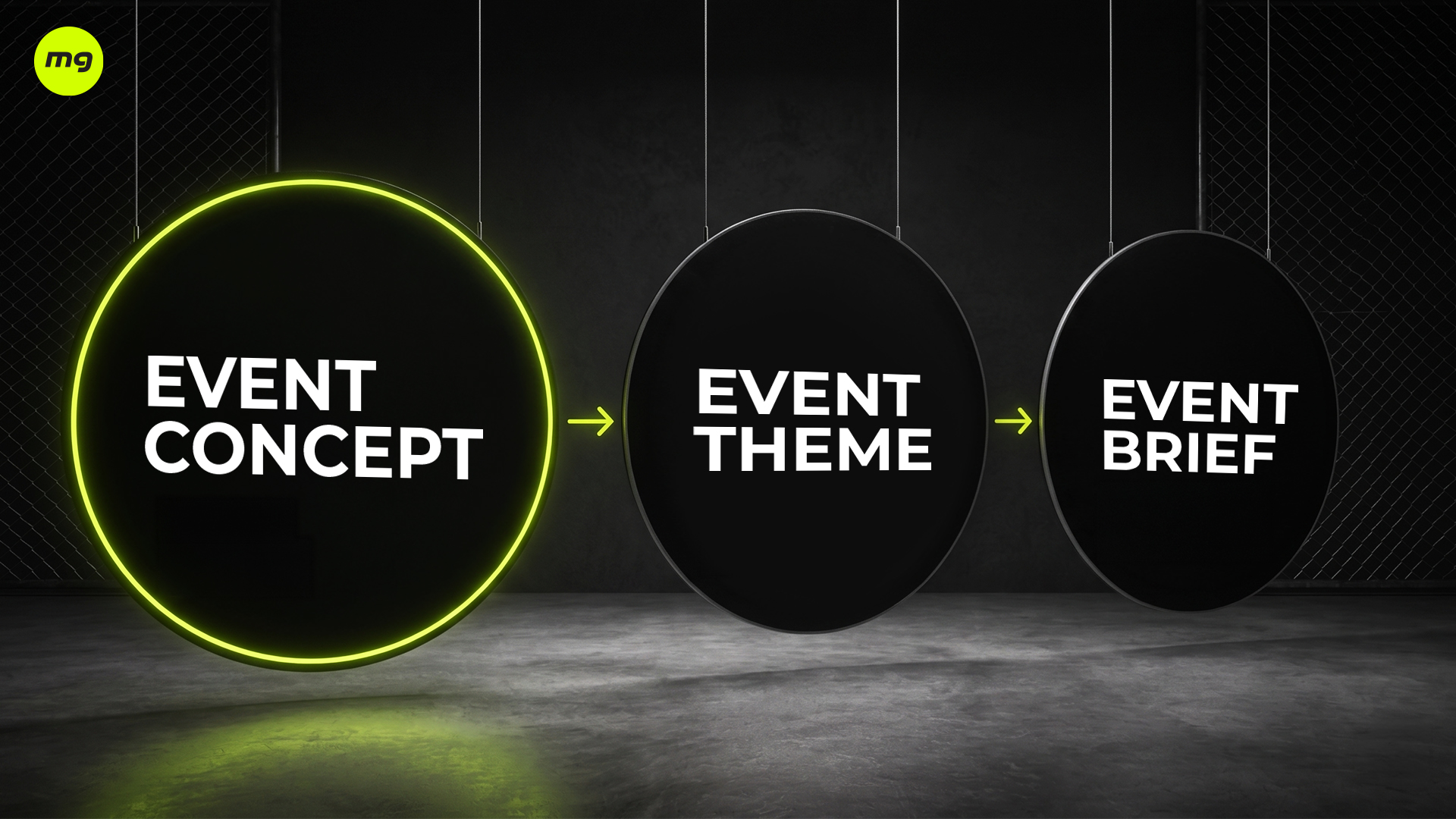
Here is what that looks like in practice, using a corporate networking event as the example:
| Concept | Theme | Brief | |
| Question | Why does this event exist? | What should it look and feel like? | Who does what, when, and within what constraints? |
| Output | One idea, one to two sentences | Visual direction, tone, atmosphere | Execution document with deadlines and deliverables |
| Order | First | After concept | After theme |
| Wrong when… | It needs a paragraph to explain | It is chosen before the concept | It is written before the concept is clear |
Working backwards from brief to concept is like building a house from the roof down. It is possible for a while, and then it collapses in ways that are hard to trace back to the original mistake.
Why the Event Concept Gets Confused With the Theme and the Brief
Event concept, event theme, and event brief are three terms that often get treated as the same thing in the same planning meeting. The confusion is not unique to events. A global study by the BetterBriefs Project, surveying 1,731 marketers and agency professionals across over 70 countries, found that an estimated 33% of marketing budgets are wasted due to poor briefs and misdirected work, with agencies and marketers repeatedly agreeing the brief is simultaneously the most valuable and most neglected tool in the process.
The fix is simple in theory: know which layer you are working on, and work on it in the right order.
#1 What Is an Event Concept?
A lot of definitions make this sound bigger than it is. Here is the working version.
The Working Definition
An event concept is the single reason a specific event exists, expressed clearly enough that everyone involved immediately understands what experience they are trying to create, for whom, and why. It is not a tagline. It is not a visual direction. It is not a list of activities.
The practical test: a strong event concept can be said in two sentences. If you need a paragraph, you are writing a brief that is trying to do the work of a concept.
What a Concept Actually Answers
Before anything else is decided, the concept must answer three questions:
- What does this event exist to do, beyond simply taking place?
- What should attendees feel or understand when they leave?
- If this event could say one thing, what would it say?
These are not branding questions. They are planning questions. And they need clear answers before a theme or a brief can do their jobs.
#2 What Is an Event Theme?
Theme as Expression, Not Foundation
A theme is how the concept gets translated into visual and sensory language. It is the mood, the palette, the atmosphere. One concept can support many different themes across different years, audiences, or budgets. But the concept stays constant as long as the brand stays constant.
The Most Common Mistake
Choosing the theme before the concept is in place. The result is an event that looks visually coherent but communicates nothing specific. Beautiful, but empty. This is the most common mistake in corporate event planning, and it often goes unnoticed because the event still “goes well.”
# 3 What Is an Event Brief?
Brief as Translation Layer
An event brief converts the concept and theme into execution language: who does what, by when, within what constraints. It is not the place where the concept gets decided. If the concept is unclear when the brief is written, the brief becomes a collection of requirements with no shared direction.
What a Brief Cannot Do
A detailed brief with a vague concept still produces unfocused execution. Vendors deliver exactly what the brief says and miss what the event was meant to be. This is why so many events are “right according to the brief” but wrong according to the original goal. The brief cannot carry the weight of an underdeveloped concept.
When Event Concept Becomes a Brand Statement
There is a version of the event concept that goes further. It happens when the concept does not just direct an event. It says something about the brand behind it.
FLS Group and its signature event concept at Breakbulk Europe 2023
FLS Group at Breakbulk Europe 2023 in Rotterdam is one example worth looking at. Breakbulk Europe is the world’s largest project cargo and breakbulk exhibition. Over 500 exhibitors were competing for attention in the same space. In that environment, visual differentiation was nearly impossible. Everyone had a backdrop, a branded booth, and a team in matching shirts.
FLS built their presence around a concept that reflected exactly who they are: “Keeping the World Moving.” It was not a slogan placed on a banner. It became physical. A revolving globe bar stood at the center of their booth, turning continuously, a literal expression of the concept. Every element, from booth design to how the team engaged visitors, grew from that one idea.
The technical point here: when a concept is right and clear enough, it does not need to be explained. It operates on its own. That is the highest standard an event concept can meet. And that standard is exactly what we push for at [mg.limited].
Conclusion
Event concept, event theme, and event brief are not 03 different names for the same thing. They are 03 layers in a process that has a specific order, and each layer only works correctly when the one before it has been resolved.
Concept answers “why.” Theme answers “what does it look and feel like.” Brief answers “who does what.” Getting the order wrong guarantees that your event will not say anything, even when everything else goes right.
The simplest test: say your concept in 01 sentences. If you cannot, go back to the first layer.
Ready to build a meaningful brand strategy where every concept works to amplify your brand? Let’s book a call with us and go the extra mile together.
FAQ
1. What is an event concept, in the simplest definition?
An event concept is the single reason a specific event exists, expressed as one clear idea. It answers: what experience is this event trying to create, for whom, and why? A strong concept can be explained in two sentences.
2. What is the difference between event concept and event theme?
The concept is the “why” of the event. The theme is how the concept gets expressed through visuals and atmosphere. Theme serves the concept. It does not come before it. One concept can support many different themes, but the concept itself stays constant as long as the brand does.
3. When should the event brief be written?
After the concept and theme are both clear. The brief translates those decisions into execution language: who does what, by when, and within what constraints. Writing a brief before the concept exists is the most common reason execution ends up “right according to the brief” but wrong according to the original goal.
4. How do I know if my event concept is clear enough?
If you need more than two sentences to explain your concept to a vendor or sponsor, it is not clear enough yet. A strong concept is understood immediately, without additional context. That is not a high bar. It is the minimum condition for consistent execution across every team and supplier involved.
5. Does an event concept apply to office events or internal events?
Yes. Even a team-building session benefits from a concept if the goal is to create something meaningful rather than just filling a calendar slot. Concept does not depend on scale. It depends on whether you have something worth communicating. Even the smallest event concept example, when done right, creates a more focused and memorable experience than any activity without one. That applies to creative ideas for office events just as much as it does to global exhibitions.
